
Quick Answer
The best ultrasonic dental scalers in 2026 are dominated by Dentsply Sirona’s Cavitron series (magnetostrictive technology) and EMS/NSK models (piezoelectric technology). Both technologies effectively remove calculus and plaque using high-frequency vibrations, with choice often depending on specific clinical needs and practitioner preference.
Key Points:
- Magnetostrictive scalers (Cavitron) use electromagnetic energy with elliptical tip motion
- Piezoelectric scalers (EMS/NSK) offer linear tip movement with potentially less heat generation
- Both technologies are considered gold standard for calculus removal compared to manual scaling
Ultrasonic scalers are the gold standard for removing hardened calculus and deep plaque, transforming dental hygiene from a manual scrape to a high-frequency, vibration-driven process.
The professional market is dominated by two competing technologies, Magnetostrictive (led by the Dentsply Sirona Cavitron series) and Piezoelectric (championed by EMS and NSK). While both are clinically proven to deliver superior cleaning, they differ fundamentally in the geometry of the tip motion—one offering a wide, elliptical scrub, the other a precise, linear chisel.
This comprehensive guide reviews the top-rated professional units in each class, helping practices balance power, precision, and patient comfort.
Note: For Fast Premium Amazon Delivery: Sign up for Amazon Prime . And if you are a college/university student Sign up here.
1. Magnetostrictive Technology: Dentsply Sirona Cavitron Series
Cavitron is often considered the industry benchmark for magnetostrictive scalers, especially in the US market. They are prized for power, efficiency, and a wide selection of inserts.
| Model | Key Features & Praised Benefits |
| Cavitron Touch (Newer Model) | Ergonomics & Tech: Features a wireless “Tap-On” foot pedal to reduce operator ankle fatigue, a 360-degree rotating handpiece, and power presets for ease of use. User Focus: Efficiency & Comfort: Ideal for practices prioritizing top-tier ergonomics and a seamless workflow. Highly effective on heavy calculus. |
| Cavitron 300 Series | Advanced Control: Digital touch-screen interface. Includes SPS (Sustained Performance System) technology to maintain power even under load. User Focus: Performance & Precision: A high-performance unit offering excellent power management and control. |
| Cavitron Jet Plus | Dual Function: Combines ultrasonic scaling with air polishing capability in one unit. Features a “Tap-On” technology and a purge function for waterline cleaning. User Focus: Versatility: Best for practices that want to consolidate equipment, offering a combined solution for scaling and stain removal/prophylaxis. |
| General Consensus | Cavitron’s elliptical tip motion is praised as being less technique-sensitive, allowing for efficient removal of large, tenacious calculus deposits. User Focus: High Power & Less Technique-Sensitive |
2. Piezoelectric Technology: EMS and NSK/Acteon
Piezoelectric units are known for their linear, precise motion, which many clinicians prefer for fine scaling and root surface preservation. EMS (Electro Medical Systems) and NSK/Acteon (Satelec) are the most well-regarded names in this category.
| Brand/Model | Key Features & Praised Benefits |
| EMS Piezon Master Series | “No Pain” Technology: Known for precise, linear tip oscillation that is highly controlled, leading to greater patient comfort and minimal root damage. User Focus: Patient Comfort & Perio: Preferred by clinicians focused on delicate periodontal debridement and patient tolerance. The EMS PS tip is a popular universal choice. |
| EMS AIRFLOW Master Piezon | Triple Function: Combines Piezon scaling with supra- and sub-gingival air polishing. (Part of the Guided Biofilm Therapy, or GBT, protocol). User Focus: Comprehensive Hygiene: The gold standard for modern, holistic hygiene protocols that involve biofilm management and stain removal. |
| NSK Varios Series (e.g., Varios 970) | iPiezo Engine: Auto-tuning for optimal frequency and power. Often features fiber optics (LUX models) for superior visibility. Wide range of tips. User Focus: Precision & Visibility: Excellent for detailed work, including endo and complex restorations, where tip illumination is a major advantage. |
| Acteon (Satelec) Newtron Series | Power & Gentle: Uses ceramic disks for precise linear tip movement, offering a balance of powerful calculus removal and gentle treatment. User Focus: Technique-Focused: Ideal for clinicians who master the linear-motion technique for targeted, controlled debridement. |
| General Consensus | Piezo units are lauded for a narrower, more focused movement, which provides excellent control, especially in deep pockets. They generate less heat and often require less water. User Focus: Precision & Root Preservation |
3. Budget & Value-Oriented Options
For practices that require reliable performance at a more accessible price point, brands like Woodpecker and Bonart offer professional-grade Piezo and Magnetostrictive units.
- Woodpecker: Widely recognized for affordable Piezo units (e.g., UDS-E) that are often EMS-compatible with their tips. They frequently include features like self-contained water bottles and LED handpieces.
- Bonart: Offers both Piezo and Magnetostrictive models at competitive prices, with their Magnetostrictive scalers often being compatible with Cavitron inserts.
Important Note on Home Use Devices
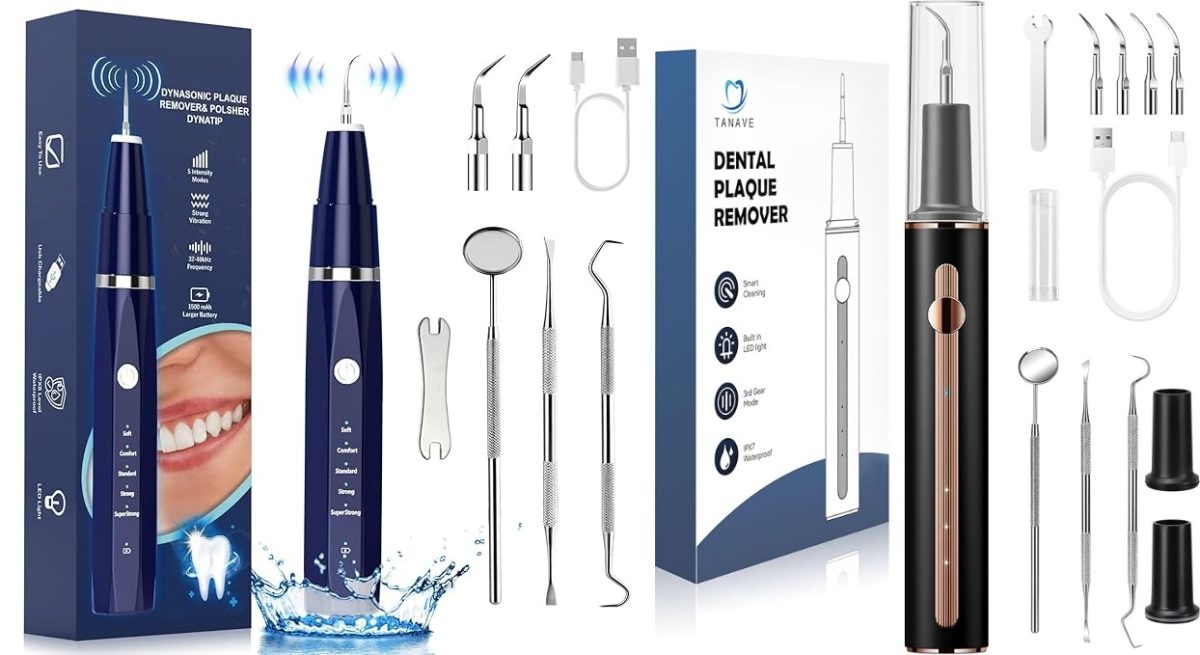
It is critical to distinguish between professional-grade ultrasonic scalers (reviewed above) and at-home ultrasonic teeth cleaners sold to the public. Dentists and hygienists strongly advise against patients using the metal-tipped home devices, as improper technique can easily damage tooth enamel, cementum, and gum tissue. The professional units mentioned here require specific training for safe and effective use.
Ultrasonic Dental Scalers – Buying Guide
Ultrasonic dental scalers are one of the most significant tools in modern professional dental hygiene and periodontics. They have largely replaced or been used in conjunction with traditional manual scaling (scraping) for removing plaque, calculus (hardened tartar), and bacterial biofilm from the tooth surfaces and beneath the gum line.
Here’s a deeper dive into how they work, their benefits, and the different types:
1. How Ultrasonic Scalers Work
The fundamental principle is the conversion of electrical energy into high-frequency mechanical vibrations (ultrasound).
- Vibrational Mechanism: The tip of the scaler vibrates extremely fast, typically in the range of 20,000 to 50,000 cycles per second (kHz). This rapid oscillation effectively shatters and dislodges hard calculus (tartar) and plaque from the tooth surface.
- Water Irrigation (Lavage): All ultrasonic scalers use a stream of water (or sometimes an antibacterial solution) that flows from the tip. This water serves three main functions:
- Cooling: It prevents the friction from the rapid vibration from generating too much heat, which could damage the tooth pulp or soft tissue.
- Flushing: It washes away the dislodged calculus, debris, and bacteria.
- Cavitation: The vibrating tip causes the water to form tiny bubbles that rapidly collapse (implode) near the tooth surface. This process of cavitation creates shockwaves that are very effective at disrupting and destroying bacterial cells and biofilm.
2. Types of Ultrasonic Scalers
There are two main technologies used to create the ultrasonic vibration:10
| Feature | Piezoelectric Scalers (Piezo) | Magnetostrictive Scalers |
| Mechanism | Uses ceramic crystals within the handpiece. An electric current causes the crystals to rapidly change shape, creating vibration. | Uses a stack of thin metal strips or a metal rod inside the handpiece, which is surrounded by a magnetic field. |
| Tip Motion | Linear (back-and-forth) movement. | Elliptical or omnidirectional movement. |
| Active Surfaces | Primarily the lateral sides of the tip. | All surfaces (point, sides, back) are active for calculus removal. |
| Frequency | Generally higher (e.g., 29kHz to 50kHz. | Generally lower (e.g., 20kHz to 40kHz. |
| Water Requirement | Requires less water as less heat is generated at the tip. | Requires more water to cool the metal stack, which generates heat. |
3. Benefits Compared to Manual Scaling
Ultrasonic scaling offers several advantages over traditional hand scaling:
- Increased Efficiency and Speed: The high-frequency vibration removes heavy calculus much faster, significantly reducing appointment time, especially for patients with a lot of buildup.
- Improved Patient Comfort: The procedure generally requires less pressure and is often perceived as a gentler experience than the “scraping” sensation of manual instruments.
- Better Access: The slim tips can reach deep into periodontal pockets and furcations (areas where tooth roots diverge), which are hard for manual instruments to access.
- Biofilm Disruption: The water lavage and cavitation effect are highly effective at disrupting and killing bacteria and their biofilm, which is crucial for treating gum disease (periodontitis).
- Less Enamel Damage (when used correctly): The non-cutting tip glides lightly over the surface. Since less force is required, there is a reduced risk of damaging the tooth surface compared to aggressive manual scraping.
4. Specialized Tips
A major factor in their versatility is the wide array of interchangeable tips (or inserts) available for different purposes:
- Universal/General Purpose: For overall cleaning, both above and slightly below the gum line.
- Slim/Perio Tips: Longer and narrower tips designed specifically for accessing deep periodontal pockets for a procedure called scaling and root planing.
- Ball/Burnishing Tips: Used to smooth root surfaces after calculus removal or for cleaning around dental implants.
- Endodontic Tips (Endo Tips): Very fine tips used inside the root canal during root canal therapy to remove debris and tissue.
Factors to Consider When Choosing the Best Ultrasonic Scaler
Choosing the right ultrasonic dental scaler is a critical decision for any dental practice, as it impacts efficiency, patient comfort, and clinical outcomes. The choice often comes down to balancing technology preference, versatility, and cost.
Here are the key factors to consider when selecting an ultrasonic scaler:
1. Technology Type: Piezoelectric vs. Magnetostrictive
This is the most fundamental choice, as it determines the mechanism, tip motion, and active surface.
| Piezoelectric (Piezo) | Magnetostrictive (e.g., Cavitron) |
| Motion/Action; Linear/Chisel-like: Tip moves in a precise back-and-forth motion. | Elliptical/Omnidirectional: Tip moves in an orbital pattern. |
| Active Surface: Only the lateral sides of the tip are highly active. | All surfaces (point, sides, back) are active for debridement. |
| Ergonomics: Handpieces are generally slimmer and often have better tactile feedback (less overall vibration). | Handpieces can be thicker; the entire handpiece vibrates slightly, which can reduce tactile sensitivity for some users. |
| Pacemakers: Generally considered safe for all patients, including those with shielded and non-shielded pacemakers. | May be contraindicated for patients with older, non-shielded pacemakers (though newer units are often safer). Consultation with a physician is necessary. |
| Technique: Requires more technique sensitivity to maintain proper angulation (using only the lateral sides). | Considered less technique-sensitive due to the omnidirectional cleaning action. |
2. Frequency and Power
Operating Frequency (kHz)
Ultrasonic units typically operate at 25kHz or 30kHz (or higher for Piezo).
- 25kHz} vs. 30kHz (Magnetostrictive): Both are effective. 30kHz units are generally shorter, often operate slightly quieter, and are a matter of clinician preference. It is critical that the scaler insert’s kHz matches the unit’s operating frequency. Some newer units can automatically accept both 25kHz and 30kHz inserts.
- Power Settings: The power setting controls the amplitude (how far the tip moves). A low setting is used for light deposits and subgingival biofilm, while a high setting provides a longer stroke for heavy calculus. Always select the lowest effective power setting for patient comfort and to prevent root damage.
3. Water Source and Features
Water is essential for cooling and cavitation.
- Internal vs. External Water Supply: Most units connect directly to the dental unit’s water line (external). Some models include a self-contained water bottle (internal), which allows the use of non-tap water solutions (like chlorhexidine) for advanced periodontal therapy or makes the unit easily portable between treatment rooms.
- LED/Fiber Optics: Handpieces with integrated LED lighting or fiber optics significantly improve visibility, especially in deep pockets and posterior areas.
4. Tip Versatility and Cost
The range of available tips determines how many procedures the unit can handle.
- Range of Tips: Look for a system that offers a wide variety of tips:
- Universal: For supragingival (above gumline) scaling.
- Slim/Perio: For deep subgingival (below gumline) scaling and root planing.
- Implant: Tips made of plastic or carbon fiber to prevent scratching titanium implant surfaces.
- Endo: Fine tips for use in root canal procedures.
- Tip Compatibility: Some brands have proprietary tips (e.g., Cavitron inserts) that are specific to their unit, while others may be compatible across multiple systems (e.g., EMS-compatible tips). Consider the ongoing cost and availability of replacement tips/inserts.
5. Ergonomics and Patient Comfort
Features that reduce operator fatigue and patient discomfort are invaluable.
- Handpiece Design: Look for lightweight handpieces with comfortable, silicone or soft grips to minimize hand and wrist fatigue.
- Noise Level: Some units are noticeably quieter than others, which can significantly reduce patient anxiety.
- Foot Pedal Control: Features like “Tap-On” technology on the foot pedal allow the operator to activate the scaler with a single tap, reducing ankle fatigue from constant pressure.
Summary Checklist
Before purchasing, consider these main points:
- Magnetostrictive or Piezo? (Preference, Pacemaker Status, Active Surface)
- 25kHz or 30kHz (Does the generator match the inserts, or is it dual-frequency?)
- Does it need a self-contained water source? (For portability or special solutions)
- Is there a full range of tips available for all procedures (General, Perio, Endo, Implant)?
- Is the handpiece ergonomic and does the unit feature comfort additions (LED, low noise, tap-on foot pedal)?
Best At-Home Ultrasonic Teeth Cleaners
Dentists and dental hygienists strongly advise against the use of metal-tipped, true ultrasonic dental scalers marketed for at-home use. These are highly specialized tools that require professional training to operate safely.
The risks of using a metal-tipped scaler at home far outweigh any perceived benefit, and can lead to serious, irreversible damage.
Professional Warning: The Dangers of At-Home Ultrasonic Scalers
The consensus among dental professionals is that consumers should not use professional-style ultrasonic scalers or metal picks at home to remove hard calculus (tartar).
Risks of Improper Use
- Enamel Damage: Using the wrong technique, pressure, or angle can easily cause microscopic damage, scratching, or erosion of the tooth enamel and root surface, leading to sensitivity and decay.
- Gum Injury and Recession: The sharp metal tip can cut or tear the delicate gum tissue, causing pain, bleeding, inflammation, and irreversible gum recession (where the gum pulls away and exposes the sensitive root).
- Risk of Infection: Incorrect use can push calculus and bacteria deeper below the gum line, creating or accelerating periodontal (gum) disease and potentially leading to an abscess or infection.
- Ineffective Removal: Without proper training, users generally only remove visible deposits above the gum line, leaving the more harmful bacteria-laden calculus deposits underneath.
Best At-Home Alternatives Recommended by Dentists
Instead of attempting to remove hard calculus with a scaler, dental professionals recommend focusing on preventing the formation of calculus (hardened plaque) using high-quality, proven daily cleaning tools.
The “best” at-home cleaning devices are those that prevent plaque from hardening into calculus:
1. High-Quality Sonic or Electric Toothbrushes
These tools are engineered to use high-frequency vibrations to break up and remove plaque before it becomes hard calculus, without damaging the tooth surface. They are the top recommended device for daily calculus prevention.
- Top-Rated Brands: Philips Sonicare (uses sonic vibration) and Oral-B (uses oscillating/rotating technology).
- Key Features to Look For:
- Built-in 2-minute timer (with quad-pacer for sections).
- Pressure sensor (shuts off or changes light when you brush too hard, protecting your gums).
- Soft-bristled brush heads.
2. Water Flossers (Oral Irrigators)
Water flossers are highly effective at cleaning below the gum line and between teeth, where plaque and food debris accumulate. They are often a better alternative to string floss for people with braces, implants, or bridges.
- Top-Rated Brand: Waterpik.
- Benefits: Uses a pressurized stream of water to flush out loose plaque and debris, which helps prevent deep calculus buildup.
In Summary
For safe and effective calculus removal, you must visit a dental professional. For the best daily clean and to prevent calculus formation at home, invest in an electric toothbrush with a pressure sensor and a water flosser.
Best selling dental scalers:


Today’s deals:


Similar Posts:
- None Found

Dr. Tom Bell has a PhD in Medical Anthropology. He has a keen interest in oral health topics and is the founder of dentalrave. He has been an oral health researcher and electric toothbrush enthusiast for over 10 years. Tom works with Awin and others in his research. When not talking about dental hygiene and gadgets, Tom likes spending time outdoors hiking.